Studio Apartment Decor Ideas for a Calm, High-End Look
Living in a studio doesn’t mean your home has to feel temporary, cramped, or cluttered. With a few intentional choices, a small space can look calm, curated, and quietly high-end — the kind of studio that feels like a boutique hotel suite, not a “one-room compromise.”
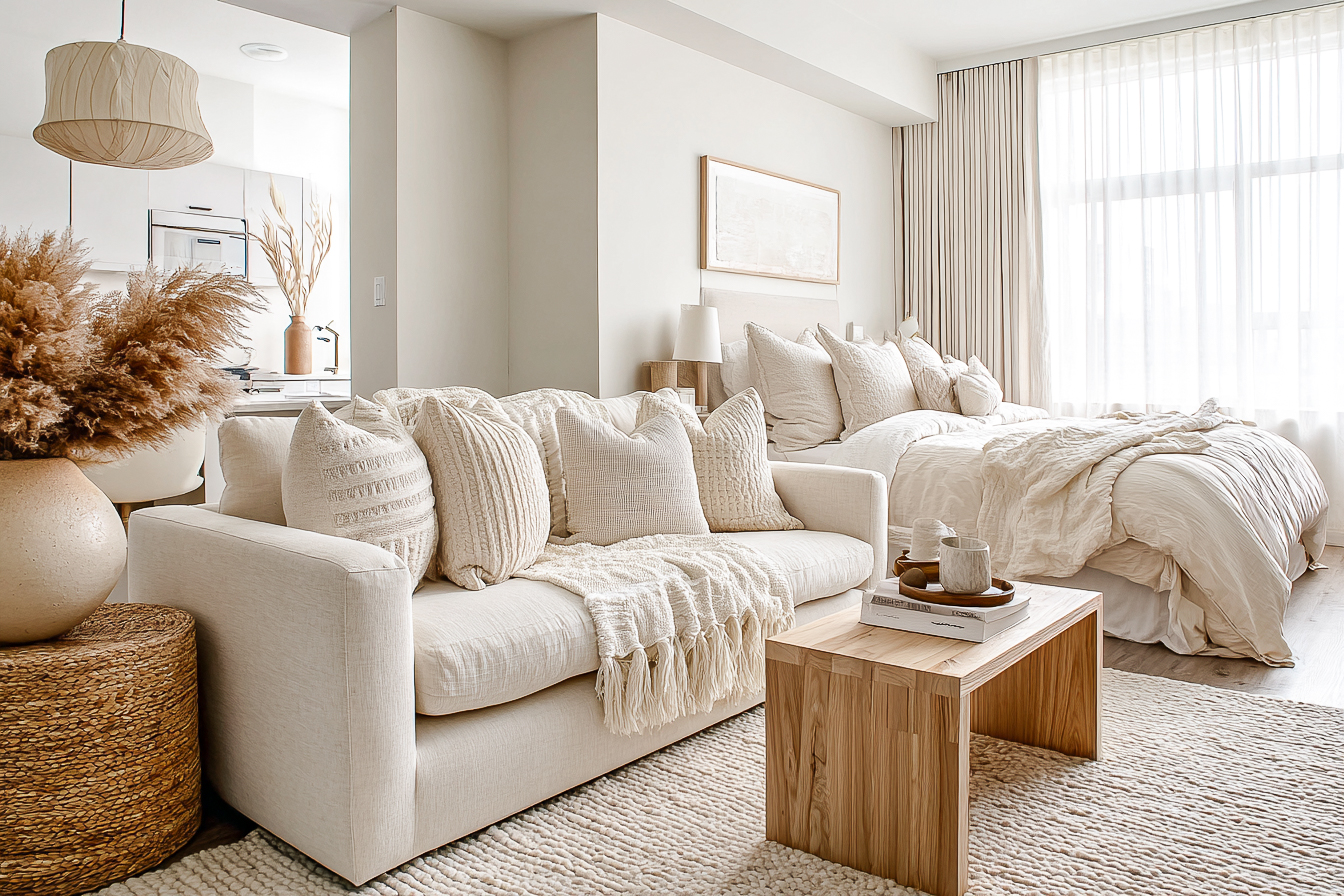
The secret is editing. In a studio, every item is visible, so the goal is to make each piece feel purposeful: a soft neutral palette, clear zones, warm lighting, and texture that adds depth without adding mess.
Below are studio-friendly decor ideas that work in real apartments — renter-friendly, budget-flexible, and easy to recreate.
1) Start With a Soft, Cohesive Color Palette
A calm studio almost always starts with a tight color story. Think warm neutrals that blend together:
- ivory + oatmeal + beige
- warm white + natural wood + soft taupe
- sand + cream + muted gray
Pick one main neutral, one supporting neutral, and one texture (linen, boucle, jute, wood). If you want a little contrast, add it through black accents or aged brass — not bright colors everywhere.
High-end tip: repeat the same undertone (warm or cool) across the whole room so everything feels “collected,” not random.
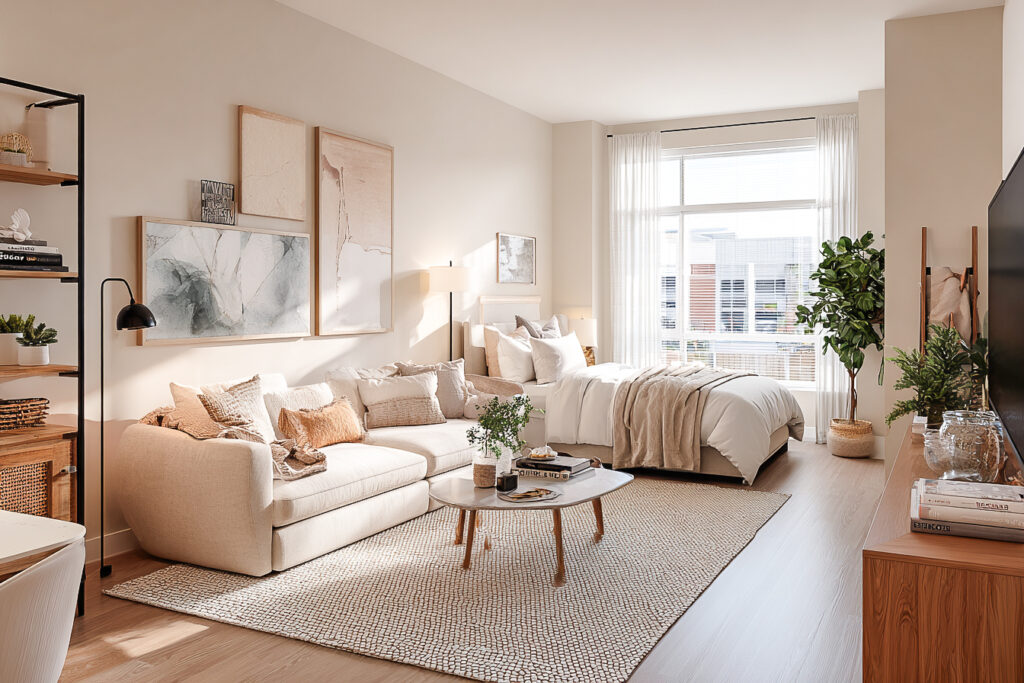
2) Define Zones (Without Building Walls)
The fastest way to make a studio look expensive is to make it feel organized. You don’t need walls — you need zones:
- a living zone (sofa + rug + lamp)
- a sleep zone (bed + bedside surface + soft light)
- a work/dining zone (small table or desk + chair)
Use a rug to “draw” the living room area, then let the bed zone feel slightly calmer and simpler. The visual separation makes the entire space feel bigger.
3) Choose One Anchor Piece That Sets the Tone
In small spaces, one strong anchor makes everything else easier. Choose one:
- a clean-lined loveseat or apartment sofa
- a large neutral rug
- a simple upholstered headboard (or elevated bedding)
Then keep the rest more minimal. When every piece tries to be the “statement,” a studio starts to feel busy.
4) Keep Furniture Visually Light
A calm studio needs furniture that doesn’t look heavy. Look for:
- legs that lift furniture off the floor
- open bases (instead of bulky skirts)
- lower profiles (especially for sofas + media units)
- slim side tables and nesting tables
This creates more “air” around pieces, which reads higher-end instantly.
5) Make the Coffee Table Do Double Duty
In a studio, a coffee table can be more than a coffee table:
- round wood table (softens tight layouts)
- nesting tables (easy to move, flexible for entertaining)
- storage ottoman (hidden clutter = calmer space)
If your living room and bedroom share one area, a storage ottoman is especially useful for blankets, extra pillows, or anything you don’t want visible.
6) Use Vertical Storage (and Make It Look Intentional)
Small spaces work best when the floor stays as clear as possible. Go vertical with:
- a tall open shelf
- wall hooks or a peg rail near the entry
- floating shelves above a desk or media unit
High-end tip: keep shelves “edited.” Use baskets or closed boxes on the bottom half and style the top half with a simple rhythm: books + one sculptural piece + a small plant.
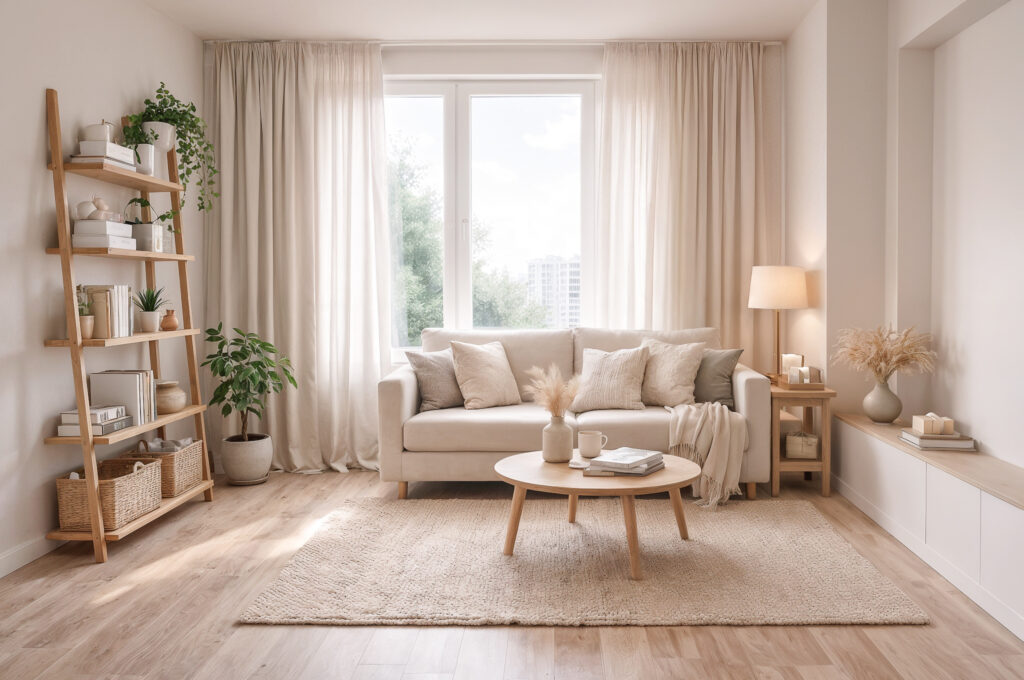
7) Hang Curtains High and Wide
Curtains change everything in a studio — they soften the room and add height. The rule is simple:
- hang the rod close to the ceiling
- extend it wider than the window
- choose a light, neutral fabric (linen or linen-look)
This makes windows feel bigger and ceilings feel taller — the kind of detail that looks designer without being expensive.
8) Create Privacy With a Soft Divider
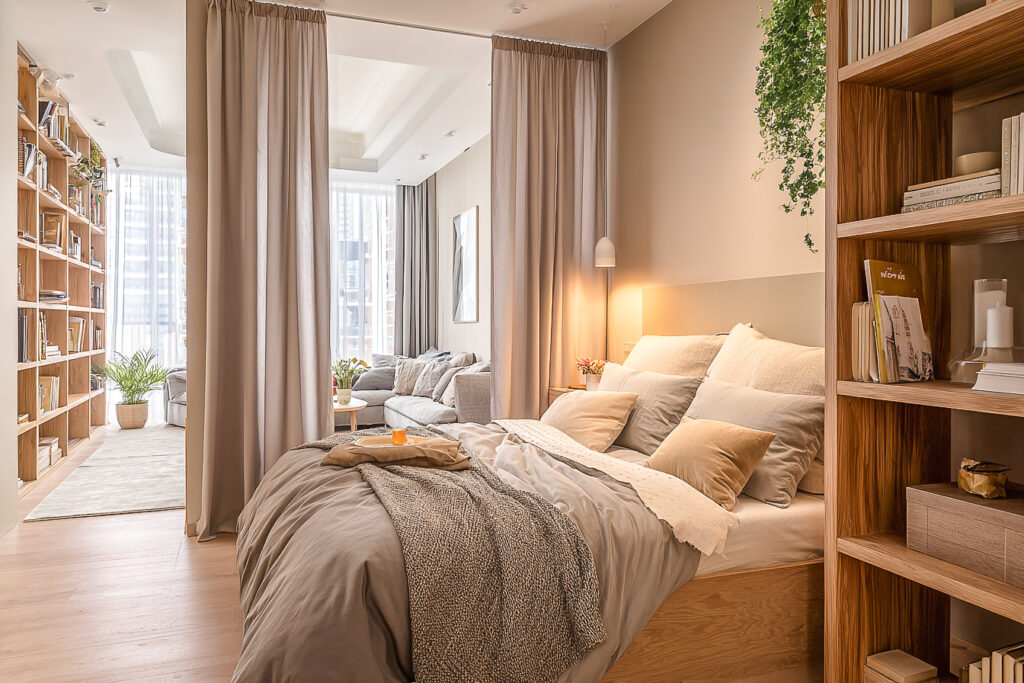
If the bed is always visible from the living area, you can still make it feel intentional:
- a curtain panel as a divider
- an open shelf used as a room separator
- a tall plant + floor lamp “corner” that blocks sightlines
You’re not hiding your bed — you’re styling it like a planned zone.
9) Add a Full-Length Mirror to Bounce Light
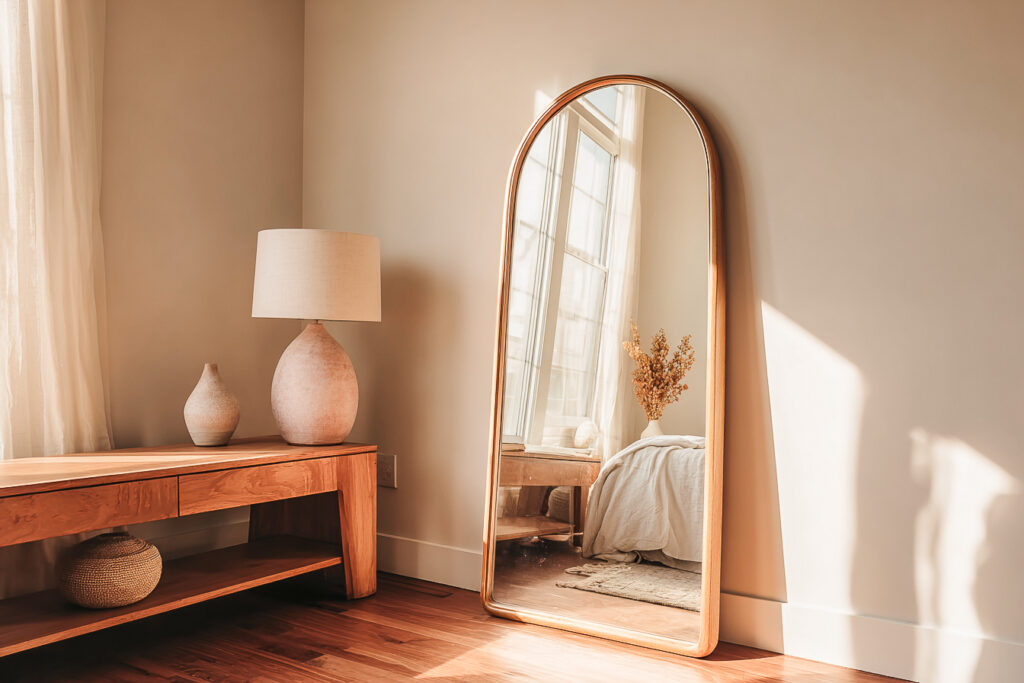
Mirrors are one of the easiest “small space luxury” moves:
- place a large mirror near a window
- or across from the brightest light source
- or lean it in a tight corner to visually open the room
A full-length mirror also makes the space feel more finished and adult — especially in studios.
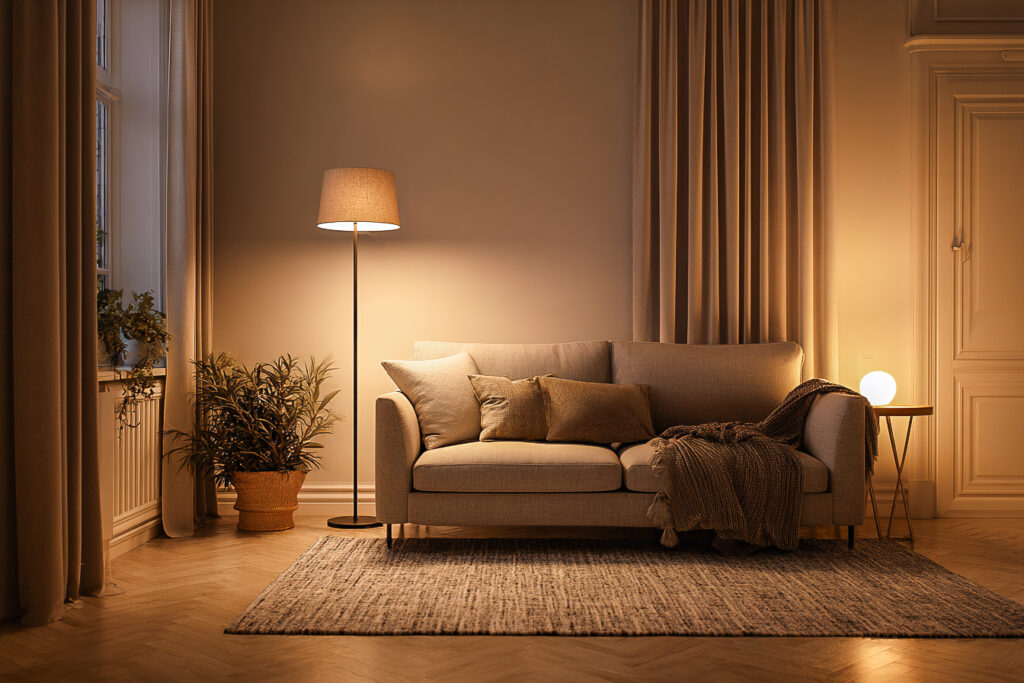
10) Layer Lighting for a Warm, Editorial Glow
Overhead lighting alone can make a studio feel flat. Instead, aim for layers:
- one floor lamp near the sofa
- one smaller lamp near the bed
- warm bulbs (soft, not harsh)
If you can add a dimmer (or use smart bulbs), even better. Warm, layered light is one of the biggest “high-end signals.”
11) Style Surfaces Like a Magazine (But Keep It Minimal)
A calm space isn’t empty — it’s edited. On a coffee table, dresser, or console, try:
- a tray
- one small stack of books
- one sculptural object (ceramic, stone, wood)
- one candle or small vase
That’s it. Too many tiny decor items turn “high-end” into “cluttered.”
12) Add Texture Instead of More Stuff
When your palette is neutral, texture becomes the design. Add depth with:
- a woven rug
- linen curtains
- a chunky throw
- matte ceramics
- natural wood
Texture makes a studio feel cozy and expensive — without needing more color or more decor.
Final note from The Living Edit
A high-end studio isn’t about perfect styling. It’s about clear zones, calm color, warm light, and a few beautiful textures. Start there, and your space will feel elevated fast.