Neutral Living Room Ideas That Look Expensive
A neutral living room can look polished, warm, and high-end without feeling cold or boring. The trick is not spending a fortune. It’s making a few smart choices that create depth, balance, and a sense of calm.
A lot of people think “neutral” means beige everything. That’s usually where the room starts to fall flat. The best neutral spaces use a mix of tones, textures, and shapes so the room feels layered instead of one-note. If you want your living room to look expensive, focus less on filling the room and more on choosing pieces that feel intentional.
Start with warm neutrals, not plain beige
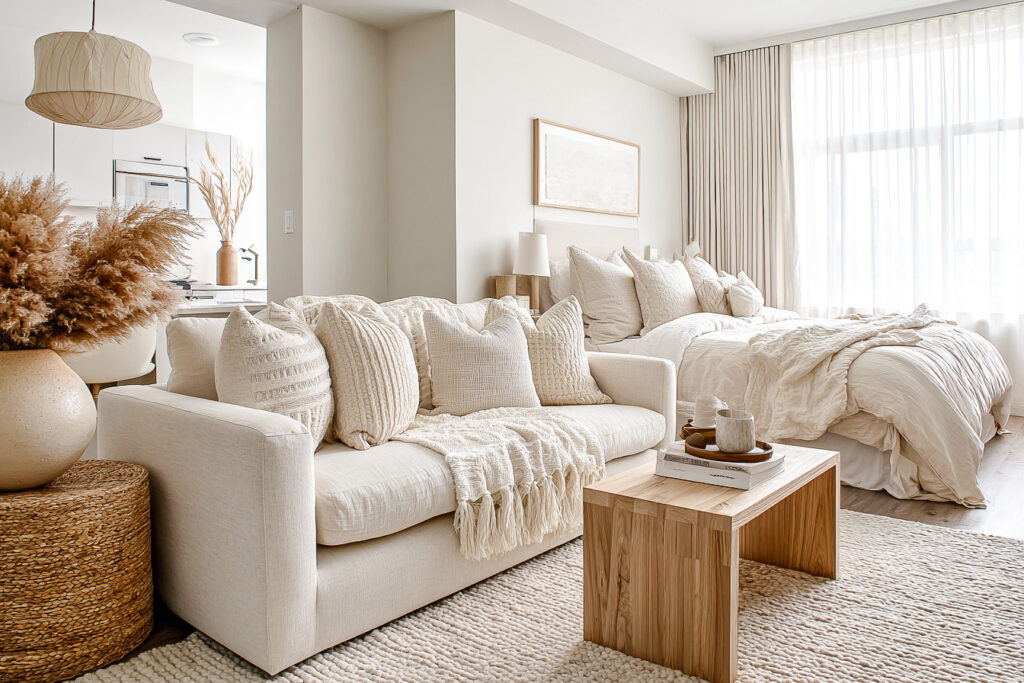
The fastest way to make a neutral room feel richer is to mix tones instead of matching everything perfectly. Think ivory, oatmeal, sand, taupe, mushroom, and soft brown. Those shades all live in the same family, but together they create a lot more depth than one flat beige used over and over again.
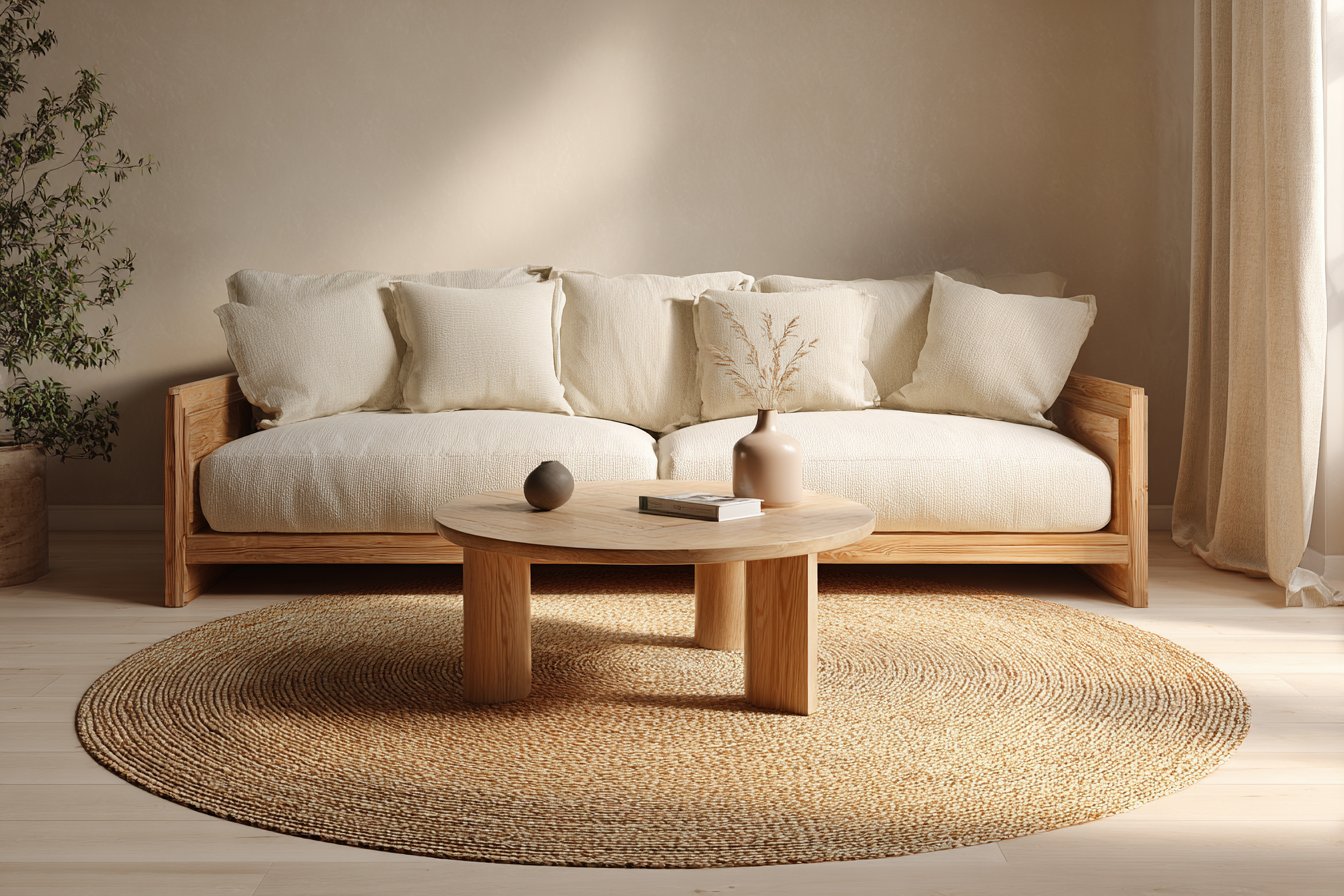
A simple formula works well: use one light base, one warm wood tone, and one slightly deeper accent. That could mean off-white walls, a natural oak coffee table, and a darker brown pillow or frame. When everything is the exact same tone, the room can feel washed out. When the tones are close but not identical, the room feels layered and elevated.
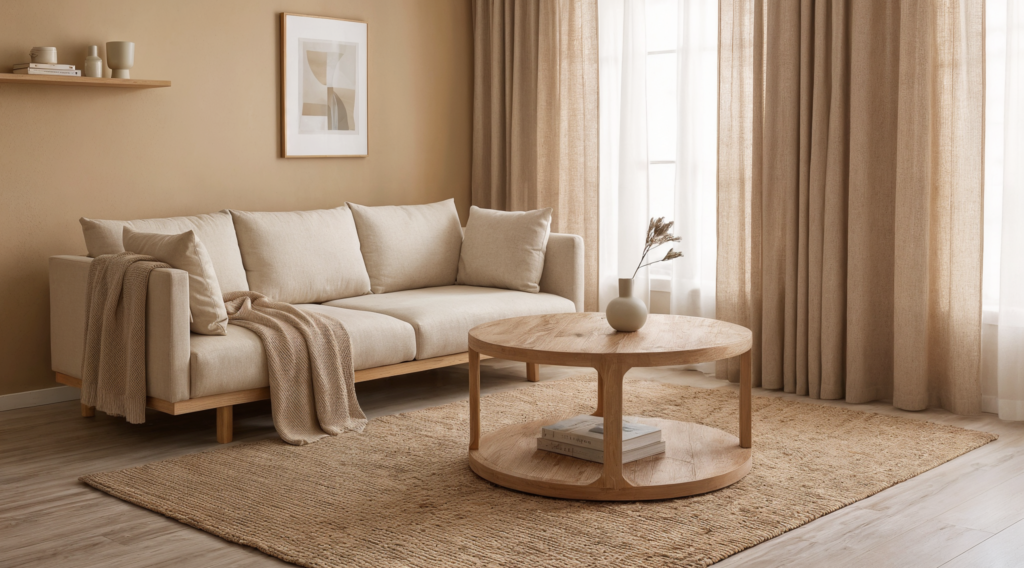
Sofa → IKEA STOCKHOLM
Coffee table → Target Castalia
Let the big pieces do the heavy lifting
If you want your living room to look expensive, the biggest pieces matter most. A sofa with a clean shape will usually look more refined than one with too many details fighting for attention. The same is true for your coffee table, media console, and accent chair.
This doesn’t mean everything has to be modern or minimal. It just means the room needs a few strong basics that look timeless. A neutral sofa, a wood coffee table, and a closed-storage media console already do a lot of the visual work. Once those pieces are right, you don’t have to over-decorate.
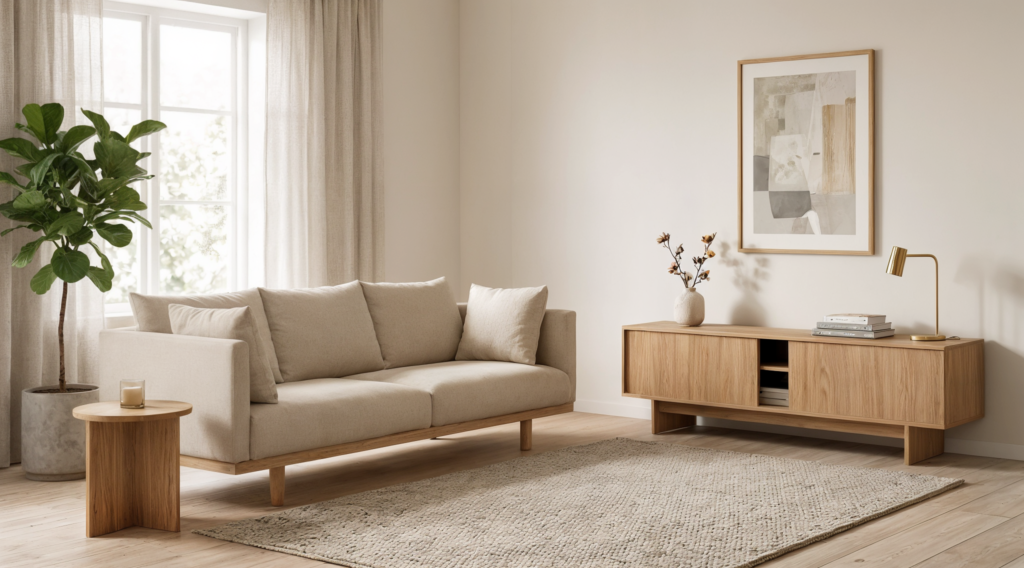
Media console → IKEA STOCKHOLM TV unit
One mistake people make is trying to fix the room with small decor before the foundation is there. Throw pillows and candles won’t save a room with a tiny rug, short curtains, and furniture that feels out of proportion. Start with the large pieces first, then style around them.
Go bigger with your rug and curtains
Nothing makes a living room feel unfinished faster than a rug that is too small. If possible, choose a rug large enough for at least the front legs of your sofa and chairs to sit on it. That instantly makes the room feel more pulled together.
In a neutral living room, rugs also add essential texture. Jute, flatweave, wool-look, and other tactile materials help the space feel grounded. Even if the color is quiet, the texture keeps the room from looking bland.
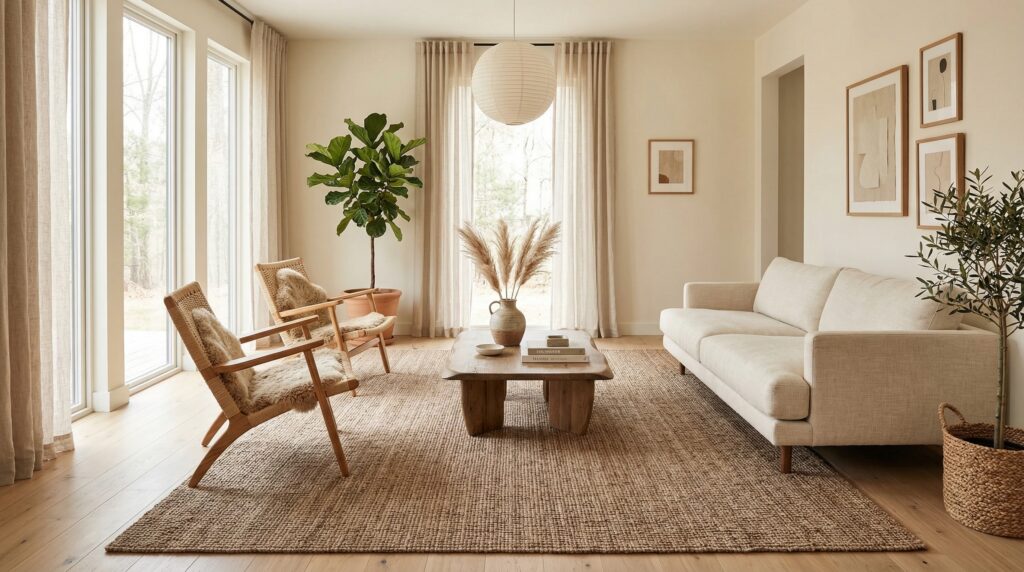
Curtains matter just as much. For that designer look, hang them high and wide. Put the rod closer to the ceiling, not directly on top of the window frame, and make sure the panels are long enough to almost touch the floor. Linen or linen-look curtains are especially good in neutral spaces because they soften the light and make the room feel more relaxed.
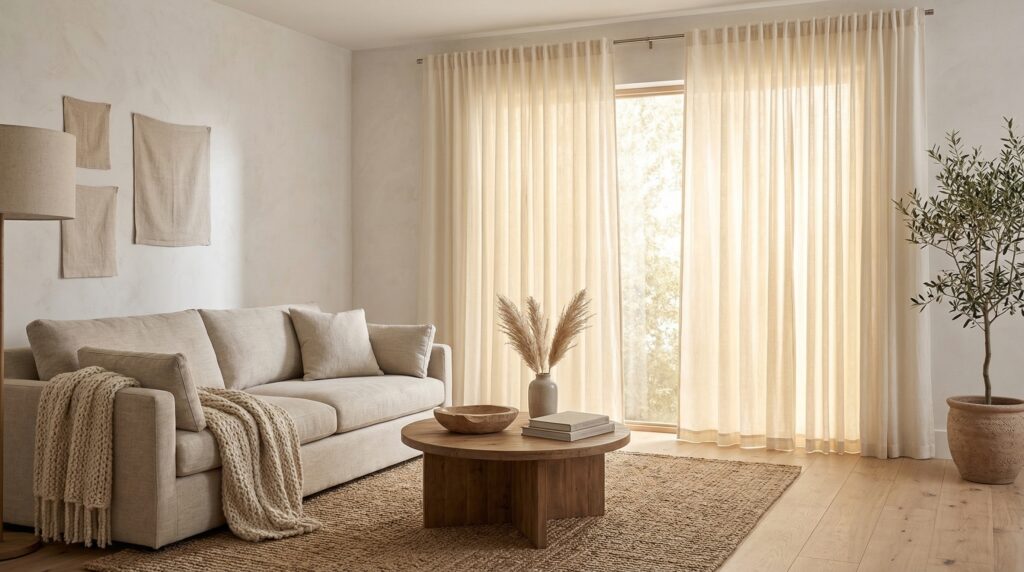
Layer texture instead of adding more color
A neutral room gets its personality from texture. That’s what makes it feel finished instead of flat.
If your sofa is smooth, add a nubby pillow. If your rug is flat, bring in a ceramic lamp. If your coffee table is wood, balance it with something softer like linen curtains or a boucle accent chair. The goal is not to add random decor. The goal is to make the room feel varied without making it feel busy.
Some of the best textures for a neutral living room are:
- linen
- cotton
- jute
- boucle
- light wood
- ceramic
- glass
- matte metal
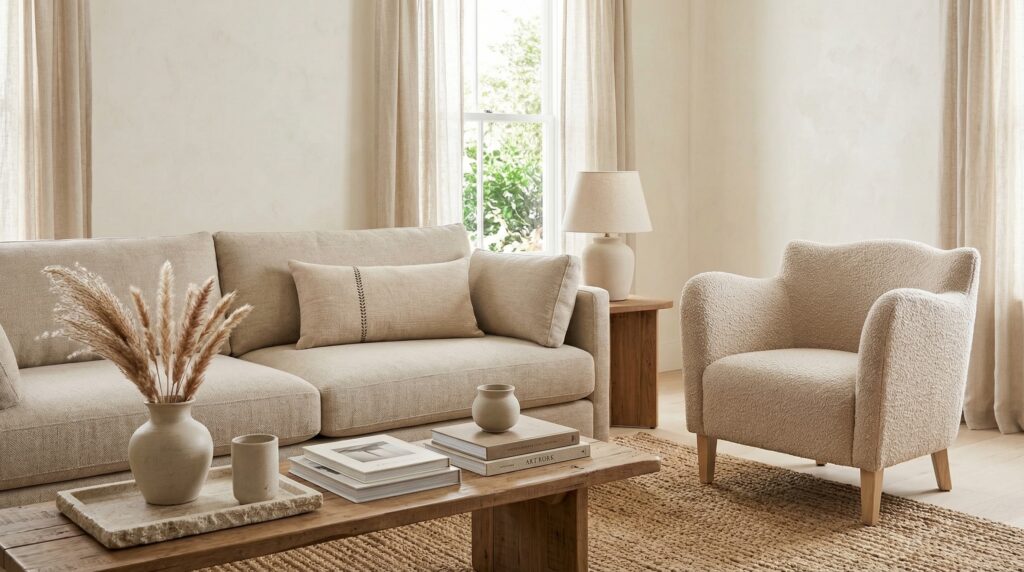
When those materials are layered well, the room looks thoughtful even if the color palette stays very simple.
Use one or two sculptural pieces
Expensive-looking rooms usually have something that breaks up all the straight lines. That could be a round coffee table, a curved lamp base, a wing-back accent chair, or a softly shaped vase on the console.
You do not need a statement piece in every corner. In fact, too many dramatic pieces can make the room feel chaotic. One or two sculptural elements are usually enough. They help the room feel styled, but still calm.
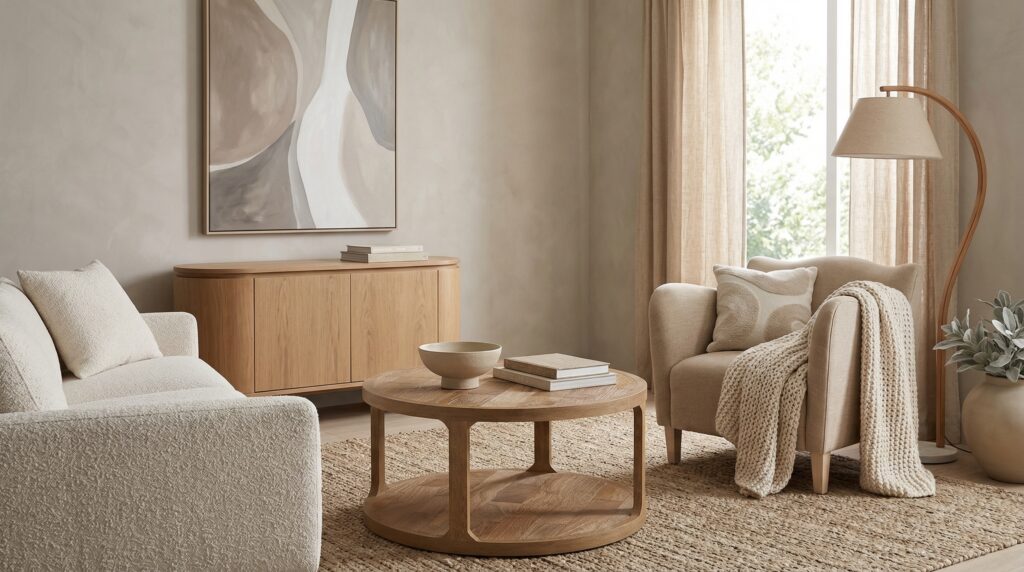
Coffee table → Target Castalia
Accent chair → Studio McGee chair
This is also why rounded shapes work so well in neutral spaces. They soften the room and keep it from feeling boxy or too rigid.
Style less, but style better
A room starts to look expensive when it feels edited. That usually means there is a little less on every surface than you think you need.
On a coffee table, try a small stack of books, a bowl, and one organic element like greenery or branches. On a media console, maybe use a lamp, a tray, and one framed piece leaning against the wall. Leave some empty space. That breathing room is part of what makes the space feel more elevated.
The same idea applies to pillows. You do not need ten throw pillows to make the sofa look finished. Two or three well-chosen pillows in different textures often look much better than a pile of mismatched ones.
Hide everyday clutter
Even a beautiful living room loses its effect when cords, remotes, chargers, and random daily clutter are always in view. One of the easiest ways to make a room feel calmer is to give that clutter a place to disappear.
A media console with doors, a coffee table with a shelf, or a basket tucked beside the sofa can make the room look instantly cleaner. This may not sound glamorous, but it is one of the biggest differences between a room that looks expensive and a room that feels unfinished.
Add lighting that feels soft and warm
A neutral room needs good lighting or it can start to feel dull. Relying only on one overhead light usually makes the space look flat.
Instead, layer your lighting. A table lamp on the console, a lamp on a side table, or a floor lamp near the sofa will give the room a warmer and more comfortable feel. In a neutral space, lighting does a lot of the work that bold color would normally do. It creates mood, softness, and depth.
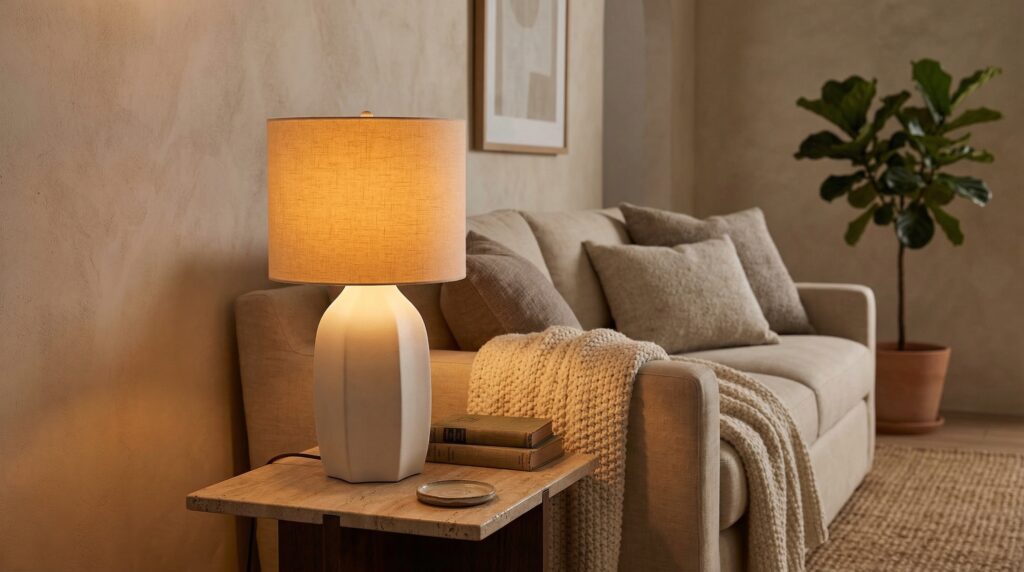
Lamp → Crate & Barrel ceramic lamp
Warm light also helps beige, cream, taupe, and wood tones look richer. That glow is part of what makes a room feel cozy and polished instead of plain.
Don’t forget contrast
A neutral living room still needs contrast. Without it, everything can blur together.
That contrast can be subtle. A black frame, a dark wood bowl, a bronze lamp detail, or even a deeper brown pillow can help anchor the space. You don’t need a lot of it. Just enough to sharpen the room and keep it from looking too soft all over.
The real secret
The most expensive-looking neutral living rooms are not necessarily full of expensive things. They just feel calm, collected, and intentional. The furniture is the right size. The textures are layered. The clutter is hidden. The styling is simple. And nothing looks like it was added just to fill space.
If you’re updating your own living room, start with the biggest wins first: sofa, rug, curtains, coffee table. Then add texture, better lighting, and a few thoughtful finishing touches. That approach almost always looks better than buying a lot of small decor and hoping it pulls the room together.
A neutral living room does not have to be boring. Done well, it looks timeless, comfortable, and quietly expensive.